The Best Time to Visit Montmartre Paris, Month by Month
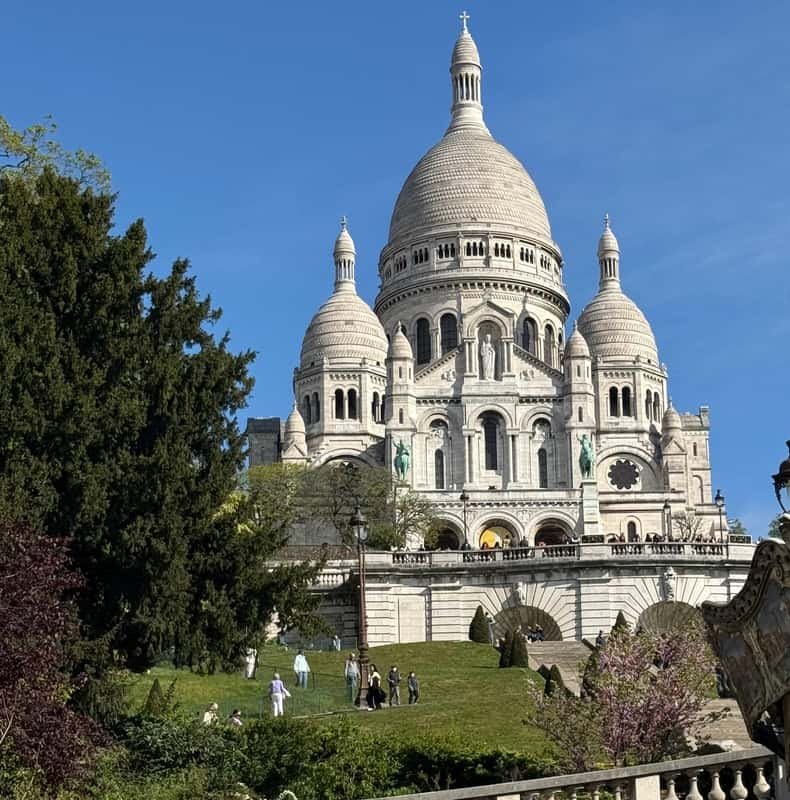
Two things change on this hill across the year: how many people are standing in Place du Tertre, and what time the sun goes down. Nothing else does — the basilica never closes, the streets are always open and the walks run in any weather. This guide is about those two variables, month by month.
When is the best time to visit Montmartre?
September, if you want one answer. It has 175 hours of sunshine, highs of 21.5 °C, one of the driest months in the Paris record at 45 mm of rain, an 8.05pm sunset and crowds that thin from the second week. May and early June come close, and both have more daylight. December has the emptiest streets of the year and the least light to see them in.
What changes across the year, and what does not
Two things change: the crowds and the light. Almost nothing else does. The basilica is open 6.30am to 10.30pm every day of the year without exception, the streets never close, the museums keep the same hours all year, and the guided walks run in all weather — two listings say so in capitals. So the seasonal decision here is not about access. It is about how many people are standing in Place du Tertre and what time the sun goes down.
How much does the sunset really move?
Five hours, and on a hill whose main free attraction is a view that matters more than the temperature. The sun sets at 4.55pm on 21 December and 9.57pm on 21 June, computed for the parvis. A tour that finishes at 6pm is a night walk in December and a broad-daylight walk in May, and the same is true of any plan you make for the terrace.
| Month | Sunset (15th) | Sun hours | Crowd level |
|---|---|---|---|
| January | 17:20 | 59 | Lowest of the year |
| February | 18:10 | 84 | Low |
| March | 18:54 | 135 | Rising |
| April | 20:40 | 177 | Busy at weekends |
| May | 21:24 | 201 | Busy |
| June | 21:55 | 204 | Very busy |
| July | 21:50 | 222 | Peak |
| August | 21:07 | 215 | Peak |
| September | 20:05 | 175 | Easing |
| October | 19:02 | 119 | Moderate, peaks for the harvest |
| November | 17:11 | 70 | Low |
| December | 16:54 | 57 | Low, except the holidays |
Spring: March to May
The best walking weather of the year and the fastest-improving light. March brings 135 hours of sun and the clocks going forward at the end of the month; April reaches 16.6 °C with a sunset around 8.40pm; May is the wettest month on the normals at 69 mm but also one of the brightest, and the rain arrives in showers rather than days. Book a few days ahead from April onwards.
Summer: June to August
The longest days and the fullest square. July is the hottest and sunniest month at 25.7 °C and 222 hours, and Place du Tertre is shoulder to shoulder from mid- morning until early evening. Two practical consequences: take the funicular rather than the 222 steps, and book anything you actually want a week ahead. August adds a wrinkle — many small businesses close for two or three weeks, which affects the food tours more than the walks.
Autumn: September to November
September is the sweet spot on every measure. October brings the vine leaves turning on rue des Saules and the Fête des Vendanges, in its 93rd edition, filling the village from 7 to 11 October 2026 — the busiest five days of the year and worth planning either into or around. November is the first properly grey month, with 70 hours of sun and a 5.11pm sunset.
Winter: December to February
Underrated, and the season to pick for a second visit. December has 57 hours of sunshine in the whole month and the earliest sunset of the year, but it also has the emptiest Place du Tertre you will ever see and a basilica lit from mid-afternoon. The hill is exposed at the top and feels colder than the boulevard below; dress a layer warmer than the forecast suggests and it is entirely comfortable.
What is on, and when
| When | What | Worth planning round? |
|---|---|---|
| 7–11 October 2026 | Fête des Vendanges de Montmartre, 93rd edition | Yes — the busiest days of the year |
| July and August | Long evenings, peak crowds | Book early, walk early |
| All year | Sacré-Cœur, 6.30am–10.30pm | No — never closes |
| All year | The dome, 10.30am–8.45pm | Check the day before; weather closes it |
| Through May 2027 | Main organ under restoration | Only if you came for the organ |
Which month suits which traveller?
First visit, one shot at it: September. Photographers: October for the vines, or December for the empty square and the early golden hour. Families: April or May, when it is warm enough to sit outside and not yet crowded enough to lose a child in. Anyone who hates crowds: January or February, and accept the light. Food travellers: anything but August, when the small shops close.
Does the weather ever stop anything?
One thing: the dome. The basilica states plainly that the dome visit sometimes closes for maintenance or weather and asks you to check its site the day before. Everything else runs regardless — the guided walks operate rain or shine, and the nave below is open to 10.30pm whatever the sky is doing. The weather page has the month-by-month conditions in full.
What stays the same all year?
The Sacré-Cœur, which opens at 6.30am and closes at 10.30pm every day of the year without exception, and the streets, which never close at all. The two museums keep the same hours in January as in July. Seasonality on this hill is entirely about crowds and light.
Which month has the best light?
October and February, for opposite reasons. October gives you a low afternoon sun that angles down the north-slope lanes, vine leaves turning on rue des Saules, and a 7pm sunset that is civilised rather than late. February gives you 84 hours of sunshine after the worst of the winter, an empty Place du Tertre and a 6.10pm sunset, and the white stone of the basilica takes low winter light unusually well.
July has the most sunshine of any month at 222 hours, and it is the hardest month to photograph the hill well, because everything except the Moulin Rouge wants an empty street and there are none.
Should you plan around the harvest festival?
Into it or away from it, but not accidentally. The Fête des Vendanges de Montmartre runs from 7 to 11 October 2026 in its 93rd edition, and it fills the village with parades, tastings and street music for five days. It is free to walk into and it is the most alive the neighbourhood gets all year.
It is also, by a distance, the busiest. If your reason for coming is empty cobbles and a quiet square, those five days are the wrong five days, and the week after them is one of the best weeks of the year. Either way, book anything you want on those dates well ahead.
Which weeks are genuinely quiet?
Four windows, and they are not the ones people expect. The second half of January and the whole of February are the emptiest of the year, with the trade being 59 and 84 hours of sunshine respectively. The two weeks after the harvest festival — mid to late October — are quiet and still bright, with 119 hours of sun in the month. The first half of March is quiet and improving fast. And any weekday morning before ten, in any month, is quieter than the busiest Sunday afternoon in February.
What is never quiet: July and August at any hour after ten in the morning, the five days of the harvest festival, and the fortnight around Christmas and New Year, when the basilica draws people who are not otherwise tourists.
Does anything close for the season?
Almost nothing, which is unusual for a European attraction. The basilica, the streets, Place du Tertre and the view are open every day of the year. The two museums keep the same hours in January as in July. Montmartre Cemetery shuts half an hour earlier from 6 November to 15 March, which is the only seasonal change on the whole hill, and the dome closes for weather rather than for winter.
The seasonal thing that does change is the businesses. A number of the small shops the food tours stop at close for two or three weeks in August, and some take a week over Christmas. That affects the food walks more than anything else here, and it is worth a question at booking if you are travelling in either window.
What time of day, whatever the month?
Before 10am, or the last hour before sunset. That is true in every month of the year and it is the single most useful piece of timing advice about this hill. In winter the second window falls conveniently at four in the afternoon; in June it is at ten at night, which is a different kind of evening and worth knowing before you plan a dinner.
Best Montmartre walking tours run all year and every one of them refunds in full up to 24 hours ahead, so booking against a forecast costs you nothing. The full list is on Montmartre Paris Tours.
Frequently asked questions
What is the best month to visit Montmartre?
Is Montmartre worth visiting in winter?
When is the Fête des Vendanges?
What time does the sun set in Paris?
What is August like on the hill?
Do the tours run in winter?
Walks that suit the season
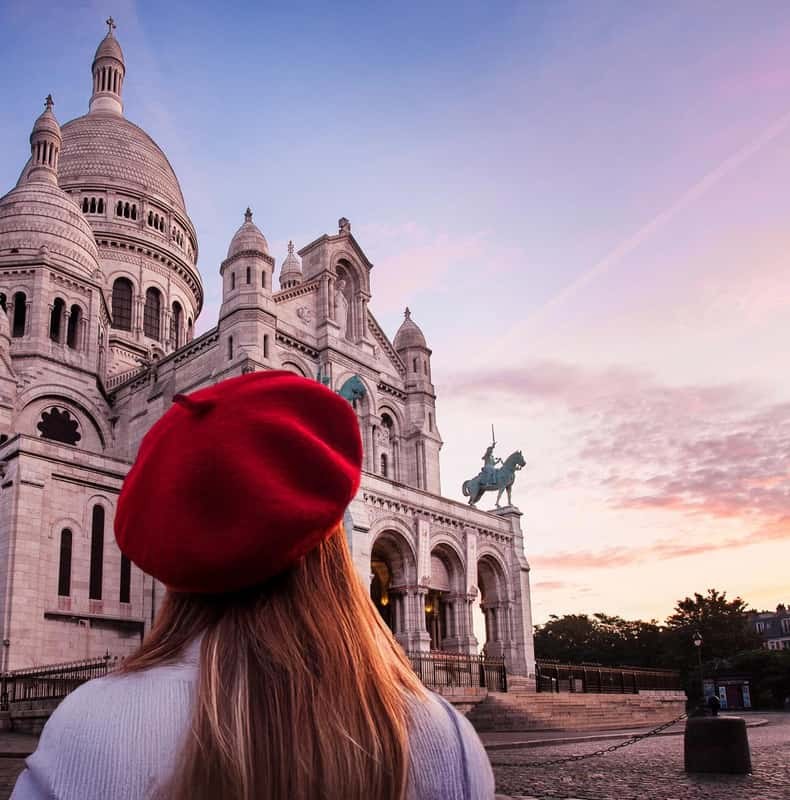
Montmartre Before the Crowds: Walk Tour & Breakfast
The answer to July and August: a dawn departure with breakfast at the end, and Place du Tertre before anybody else is in it.
From $68 per person
Check Availability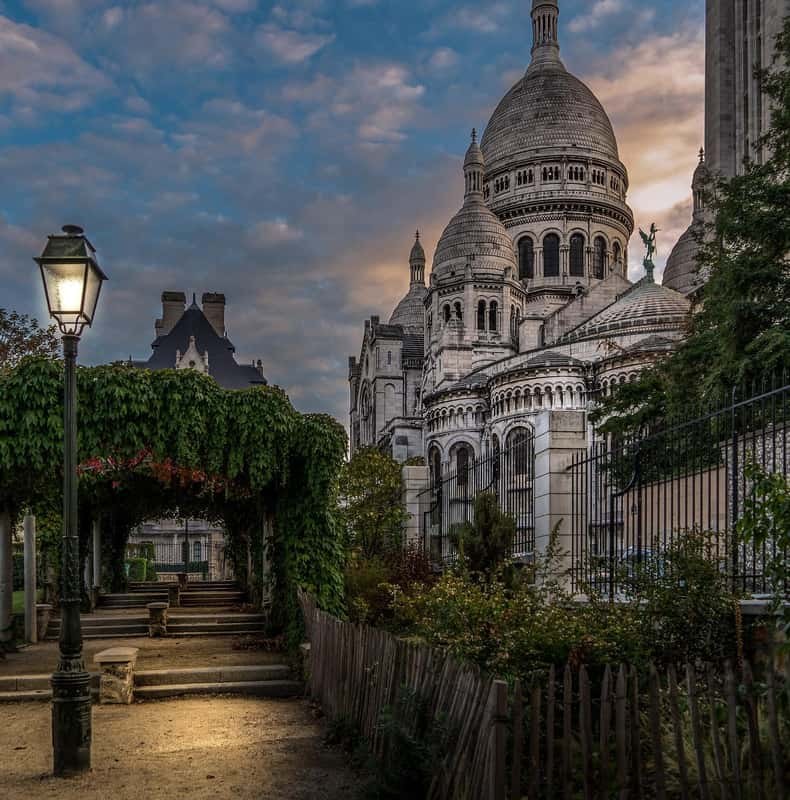
Paris: Montmartre Highlights Walking Tour with a Local Guide
Runs all year with a cap of sixteen, and the Place Saint-Pierre meeting point is the easiest to find in bad light.
From $27 per person
Check Availability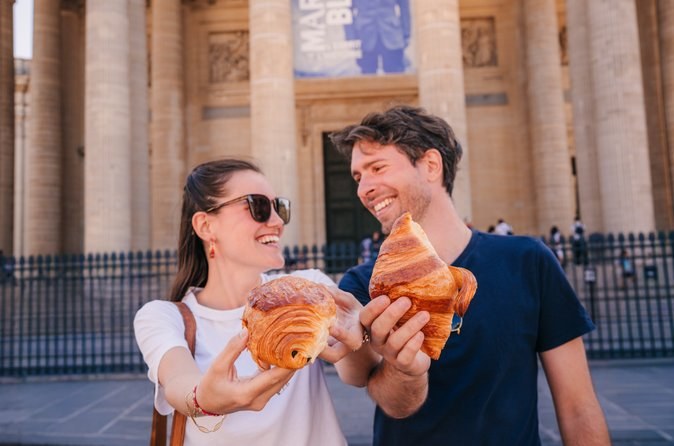
Paris Small-Group Montmartre Chocolate & Pastry Walking Tour
A winter answer: three hours of pastry, chocolate and coffee between the shops that make them, capped at twelve.
From $100 per person
Check Availability