One Day in Montmartre Paris: Blanche to Sacré-Cœur

Montmartre climbs 130 metres and has no signposted route through it, so the order you walk it in decides whether you climb the hill once or four times. This is one day, from the cemetery gate at nine in the morning to the view from the parvis at sunset, with the hours each stop actually needs.
Why the order matters more than the list
Montmartre climbs 130 metres and has no signposted route through it. Walk the sights in the order a guidebook lists them and you will climb the hill three or four times. Walk them in the order below and you climb once, at the start, and spend the rest of the day coming gently down the other side. That is the whole trick, and it is the difference between a good day here and a tiring one.
The day at a glance
| Time | Where | How long |
|---|---|---|
| 9.00am | Montmartre Cemetery, avenue Rachel | 1 hour |
| 10.15am | Place Blanche and the Moulin Rouge | 15 minutes |
| 10.30am | Rue Lepic: the Deux Moulins, Van Gogh’s house | 30 minutes |
| 11.15am | Moulin de la Galette and Le Bateau-Lavoir | 30 minutes |
| 12.00pm | Lunch on rue des Abbesses | 1 hour |
| 1.15pm | Le Mur des Je t’aime | 15 minutes |
| 1.45pm | Sacré-Cœur and the dome | 1 hour 30 |
| 3.30pm | Place du Tertre and Saint-Pierre | 45 minutes |
| 4.30pm | Rue de l’Abreuvoir, La Maison Rose | 30 minutes |
| 5.15pm | Clos Montmartre and Au Lapin Agile | 20 minutes |
| 6.00pm | Back up for the view, or down at Lamarck | — |
9.00am — start at the cemetery, not the summit
Almost nobody does this and it sets up the whole day. Montmartre Cemetery opens at 8am on weekdays and 9am on Sundays, it is free, and at that hour it is silent. More than 20,000 graves fill a former quarry under the iron bridge of rue Caulaincourt, with Degas, Nijinsky, Truffaut and Dalida among them. Give it an hour and leave by the avenue Rachel gate.
10.15am — the Moulin Rouge, from the pavement
Fifteen minutes and a photograph. It opened in 1889, it still runs its revue, and it is the easiest landmark in the quarter to find, which is why eight of the guided walks here meet within sight of it.
10.30am — up rue Lepic, slowly
This is the climb, and it is the only one you will do today. On the way: the Café des Deux Moulins from Amélie, and number 54, where Van Gogh lived with his brother Theo for two years and his palette changed completely. Neither is a stop so much as a reason to keep looking up.
11.15am — the windmill and the studios
The Moulin de la Galette is one of the two windmills left on a hill that once had thirty; it ground flour, pressed grapes, became a dance garden and ended up in a Renoir. Five minutes away, Le Bateau-Lavoir is where Picasso painted Les Demoiselles d’Avignon with Modigliani and Juan Gris working in the same building. Both are exteriors, and both are worth the stop.
Where should you eat, and when?
Noon, on or around rue des Abbesses, before you go up to the summit. The reason is practical: the restaurants around Place du Tertre are pricier and busier, and if you eat up there you will do it at the worst hour of the day. Rue des Abbesses and rue Lepic are where the food tours stop, which is a reasonable recommendation in itself — and the food-tour comparison names the streets they use.
1.45pm — the basilica, and the dome if it is open
The Sacré-Cœur is free, open from 6.30am to 10.30pm, and worth half an hour on its own: the apse mosaic of Christ in Majesty is 480 square metres and continuous prayer has been kept here since 1 August 1885. The dome is €8, 280 steps and no lift, opens at 10.30am with last admission at 8.15pm, and closes briefly at midday and altogether in bad weather. Do it now, in the afternoon, when the queue has thinned and the light is on the front of the building.
3.30pm — Place du Tertre, at the right hour
By half past three in summer the coach groups are thinning and the painters are still working. Give it forty-five minutes, and duck into Saint-Pierre de Montmartre next door, which is centuries older than the basilica beside it and free.
4.30pm — down the north slope
Rue de l’Abreuvoir is the prettiest street on the hill and La Maison Rose is on the corner of it. Below that, rue des Saules holds the Clos Montmartre — 2,000 vines, first harvested in 1934 — with Au Lapin Agile opposite. This whole stretch is inside the pedestrian zone, so it is quiet.
How do you finish the day?
Two options, and they suit different people. Climb back up for sunset on the parvis, which is free, and which happens anywhere between 4.55pm in late December and 9.57pm in late June — check the month-by-month page before you plan around it. Or carry on down to Lamarck-Caulaincourt and take line 12 out, which is the quiet exit and puts you on a metro that is not full of everybody else leaving the hill at once.
Is the Moulin Rouge worth stopping for?
From the pavement, for fifteen minutes, yes. The Moulin Rouge opened in 1889 and its red sails are the marker everybody uses to find the bottom of the hill, which is why so many guided walks meet within sight of it. The show itself is a separate evening and a separate booking with the theatre, and no guided walk listed here includes it.
Where the day goes wrong, and how to avoid it
Three things go wrong on this hill, and all three are avoidable.
Climbing more than once. The single biggest waste of a Montmartre day is walking back up. Everything on the north slope — the vineyard, Au Lapin Agile, rue de l’Abreuvoir — is below the summit, so do the top first and come down through them.
Eating at the top. The restaurants around Place du Tertre are the priciest on the hill and the busiest at exactly the hour you would reach them. Eat lower down, before you climb.
Planning around the dome. It closes at midday for the staff break, it closes for weather, and it has 280 steps. Treat it as a bonus rather than a fixture, and you will not lose an hour waiting.
What to do if it rains all day?
The walk still works — the guided tours run rain or shine and two say so in capitals — but the shape changes. Give the basilica longer, because it is free, enormous and dry. Add Dalí Paris, which is €16 for more than 300 works in the old quarry cellars a minute off Place du Tertre. And swap the cemetery hour for the Musée de Montmartre at 12 rue Cortot, where Renoir, Valadon and Utrillo all worked, at €16 or €6 for the gardens and the café alone.
That is a full day indoors on a hill people think of as an outdoor one, and the things-to-do page has the opening hours for all three.
What if you only have half a day?
Cut the cemetery and the dome, come in at Anvers, take the funicular up, and run the route backwards from the basilica down through Place du Tertre, rue de l’Abreuvoir and the vineyard to Abbesses. That is two hours and it keeps the climb off your legs entirely, which is exactly the shape most of the guided walks use.
What to do with a second day
Plenty of people come back, and the second day is a different shape. Give it to the things the first day skipped: the Musée de Montmartre and its Renoir gardens, an hour in Dalí Paris under Place du Tertre, and the streets east of the summit that almost nobody walks — rue du Mont-Cenis, rue Saint-Vincent and the steps down to Lamarck. Add a long lunch rather than a quick one, because on a second visit you are not racing the light.
If the first day was self-guided, this is the day to add a guide, and the reverse is also true. Doing the same hill twice in two different modes is the cheapest way to see how much a guide was actually adding.
What this day costs
| Item | Cost |
|---|---|
| Metro to Blanche or Anvers | €2.55 |
| Montmartre Cemetery | Free |
| Sacré-Cœur nave | Free |
| The dome | €8 |
| Lunch on rue des Abbesses | €20–€35 |
| Funicular, if you use it | €2.55 |
| Metro out from Lamarck | €2.55 |
Call it €40 a head with a decent lunch, of which €8 is the only admission. Montmartre walking tours add a guide to the same route from $23; the full breakdown of what a day here costs is on the visitor information page, and Montmartre Paris Tours lists the departures.
Frequently asked questions
Is one day enough for Montmartre?
Should I start at the top or the bottom?
When is Place du Tertre least busy?
Can I do this itinerary with children?
Where should I eat on this route?
How much walking is it?
Guided walks that follow this route
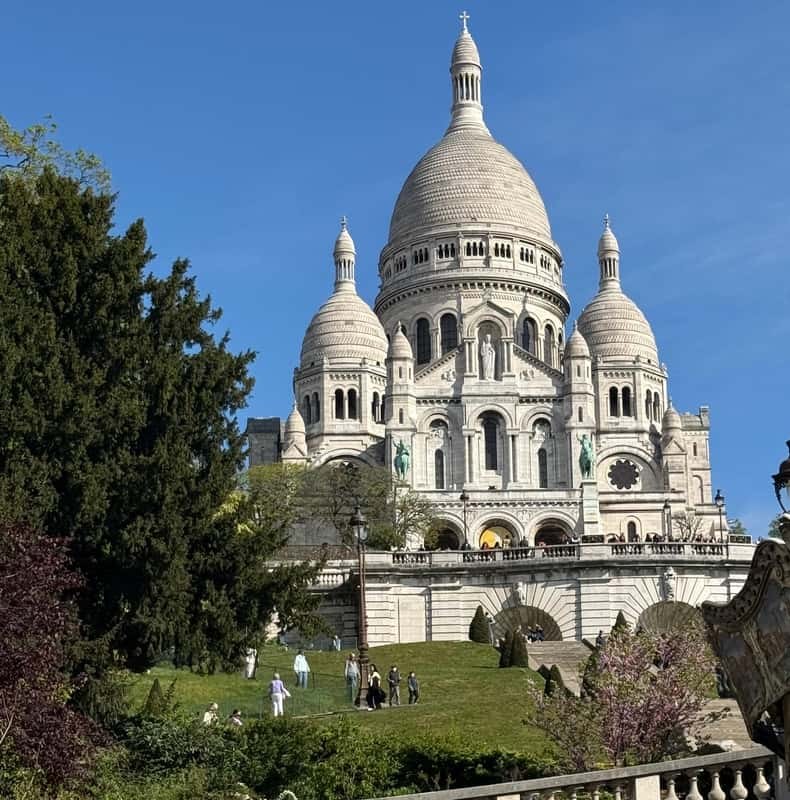
Paris: Montmartre Must-See Walking Tour with a Local Guide
Twelve stops in two and a half hours, in almost exactly this order, finishing at Abbesses beside the lift.
From $29 per person
Check Availability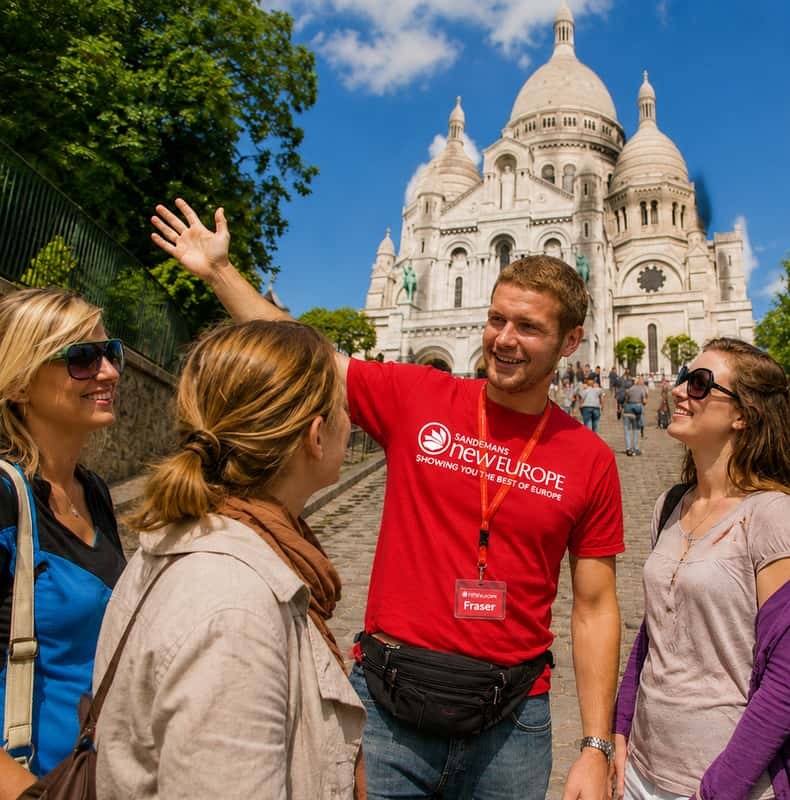
Montmartre & Sacré-Cœur Walking Tour with a Local Guide
Place Blanche to the basilica terrace in one continuous line, taking in Van Gogh's house, the Bateau-Lavoir and the vineyard.
From $30 per person
Check Availability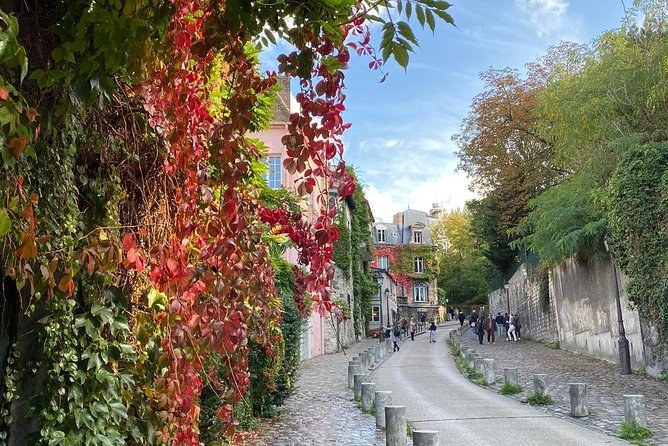
Montmartre Semi Private Tour: from Moulin Rouge, to Sacré-Cœur
Two hours with a full forty-five minutes at the basilica, and warm bread from a local bakery on the way up.
From $111 per person
Check Availability