The Artists of Montmartre Paris: 10 Addresses You Can Still Find
The short answer
The artists of Montmartre left ten addresses you can still find. Renoir worked at 12 rue Cortot, now the Musée de Montmartre and the one address here that is open as a museum. Van Gogh lived at 54 rue Lepic from June 1886, and Picasso painted Les Demoiselles d’Avignon at Le Bateau-Lavoir in 1907. Most of the rest are doorways and plaques, free to see from the street.
The ten addresses, side by side
The list runs in walking order: uphill from the Moulin Rouge, over the summit beside the Sacré-Cœur, and down the north slope to Lamarck-Caulaincourt on line 12. Guided tours of Montmartre pass most of these doors, and only number 8 asks you for a ticket.
| # | Address | Who | When | What is there now | Can you go in? |
|---|---|---|---|---|---|
| 1 | Moulin Rouge, 82 boulevard de Clichy | Toulouse-Lautrec | Poster, 1891 | The cabaret, still running | Show ticket only |
| 2 | 104 boulevard de Clichy | Van Gogh, Toulouse-Lautrec | March to June 1886 | An address on the boulevard | No |
| 3 | 54 rue Lepic | Vincent and Theo van Gogh | June 1886 to February 1888 | Private, with a plaque | No |
| 4 | Moulin de la Galette, rue Lepic | Renoir | Painted 1876 | The windmill, private | No |
| 5 | Le Bateau-Lavoir, 13 place Émile-Goudeau | Picasso, Braque, Juan Gris, Modigliani | Picasso from 1904 | Restored façade, studios behind | No |
| 6 | 49 rue Gabrielle | Picasso | 1900 | A plaque | No |
| 7 | Place du Tertre | Today’s painters | Daily | 124 licensed pitches | Yes, free |
| 8 | 12 rue Cortot | Renoir; Valadon, Utrillo, Utter | 1875–1877; from 1912 | The Musée de Montmartre | Yes, €16 |
| 9 | Au Lapin Agile, rue des Saules | Picasso | Painted 1905 | The cabaret, still open | Exterior by day |
| 10 | Place Dalida and 11 bis rue d’Orchampt | Dalida | 1962 to 1987 | A bust and a plaque | Square only, free |
See where each of these is on the hill.
The boulevard and rue Lepic: Toulouse-Lautrec, Van Gogh, Renoir
1. Moulin Rouge, 82 boulevard de Clichy: Toulouse-Lautrec
The cabaret opened in 1889. In 1891 its director, Zidler, commissioned Toulouse-Lautrec’s first poster: Moulin Rouge, La Goulue, a colour lithograph 1.70 metres by 1.30. It made his name. The revue still runs, so by day you get the frontage from the pavement.
2. 104 boulevard de Clichy: the studio where Van Gogh met Toulouse-Lautrec
Fernand Cormon taught here. Toulouse-Lautrec trained in his studio from the early 1880s, and Van Gogh worked in it from March to June 1886. Today it is an address on the boulevard, so you walk past it.
3. 54 rue Lepic: Van Gogh
In early June 1886 Vincent van Gogh and his brother Theo moved to 54 rue Lepic, and Vincent stayed until he left for Arles on 19 February 1888. He painted the outlook in View from Theo’s Apartment. The building is private: you get a doorway and a plaque.
4. Moulin de la Galette, rue Lepic: Renoir
Renoir painted the dance garden at the Moulin de la Galette in 1876, on a canvas 131.5 by 176.5 centimetres. It went on show at the Impressionist exhibition of 1877. The windmill is private, and you see it from the street.
Where did Picasso live in Montmartre?
Picasso arrived in 1900, aged 19, and set up his first Paris studio at 49 rue Gabrielle. He moved into Le Bateau-Lavoir in 1904, took a studio at 11 boulevard de Clichy in 1909 and left Montmartre in 1912. The story behind those years is in how the hill got this way.
5. Le Bateau-Lavoir, 13 place Émile-Goudeau: Picasso, Braque, Modigliani
Picasso moved in with Fernande Olivier in 1904, began his Rose Period here and painted Les Demoiselles d’Avignon in 1907. Braque, Juan Gris, Modigliani and Brancusi stayed in the same building. The wooden studios burned in May 1970, and the 1978 building restores the old façade, so you get a frontage. The Montmartre Highlights walking tour stops here.
6. 49 rue Gabrielle: Picasso’s first Paris studio
This is where he started. A commemorative plaque marks the building, and the plaque is the whole visit.
Hear the story at each door
The Montmartre & Sacré-Cœur Walking Tour with a Local Guide names 54 rue Lepic and Le Bateau-Lavoir on its route. 2 hours, rated 4.8 from 1,263 reviews. From $30 per person.
The summit and the north slope: the painters’ square, the museum, the cabaret
7. Place du Tertre: the artists working today
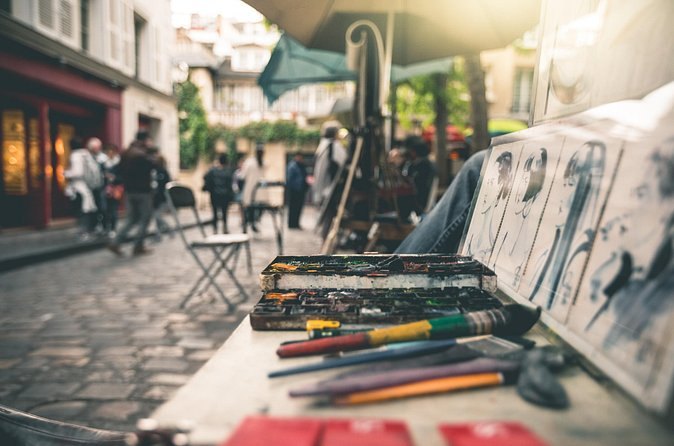
The artists on Place du Tertre are today’s, and licensed. The City of Paris marks out 124 numbered pitches: 67 for painters, 45 for portraitists, 7 for caricaturists and 5 for silhouette cutters. They work daily from 8am to 2am between 1 April and 15 November, and from 9am to midnight the rest of the year.
8. 12 rue Cortot: Renoir, Valadon and Utrillo
The Musée de Montmartre has filled this 17th-century house since 1960. Renoir lived here from 1875 to 1877. Suzanne Valadon, her son Maurice Utrillo and André Utter moved in in 1912, and their studio-apartment has been recreated. You can go in daily from 10am to 7pm for €16, with last entry 45 minutes before closing.
9. Au Lapin Agile, rue des Saules: Picasso’s cabaret
Picasso and his circle met here in the evenings. In 1905 the owner, Frédé Gérard, commissioned At the Lapin Agile, in which Picasso painted himself as Harlequin. It hung here until 1912. The cabaret still operates, and by day you see the exterior.
10. Place Dalida and 11 bis rue d’Orchampt: Dalida
The one singer on the list. Dalida bought the house in 1962 and lived there until her death on 3 May 1987. About 100 metres away, Place Dalida has carried a bronze bust by Aslan since 1997. Her grave is in division 18 of Montmartre Cemetery.
Where are the Montmartre paintings now?
The hill kept the doors and lost the canvases.
- Bal du moulin de la Galette (Renoir, 1876): the Musée d’Orsay, Paris.
- View from Theo’s Apartment (Van Gogh, 1887): the Van Gogh Museum, Amsterdam.
- At the Lapin Agile (Picasso, 1905): the Metropolitan Museum of Art, New York.
- Les Demoiselles d’Avignon (Picasso, 1907): the Museum of Modern Art, New York.
- Moulin Rouge, La Goulue (Toulouse-Lautrec, 1891): a print in the Musée Toulouse-Lautrec, Albi.
The only one you can see on the same day is the Renoir, across the river.
The Renoir and the hill in one day
A private day: the Impressionist rooms of the Musée d’Orsay, then transport up to Van Gogh’s house. From $237 per person.
Do you need a guide to find the artists’ addresses?
No. Nine of the ten are free to look at. What a guide adds is the story at each door and an order that climbs once.
The ninety-minute Montmartre walking tour covers Le Bateau-Lavoir, the Dalida bust and Place du Tertre. It is one of the shared Montmartre walking tours, and a private Montmartre tour keeps the guide to your own party.
Do You Need a Guide in Montmartre Paris? weighs the question for the whole hill. For the general walking order, read Montmartre Paris Street by Street. The one-day itinerary guide fits these addresses into your day.
Montmartre artists: questions people ask
Which famous artists lived in Montmartre?
Can you visit Van Gogh’s apartment at 54 rue Lepic?
Can you go inside Le Bateau-Lavoir?
Where did Picasso paint Les Demoiselles d’Avignon?
Are there still artists on Place du Tertre?
Ten doors, one museum ticket and a climb you only make once. The walks that stop at them are on Montmartre Paris Tours.
Walks that stop at the artists’ addresses
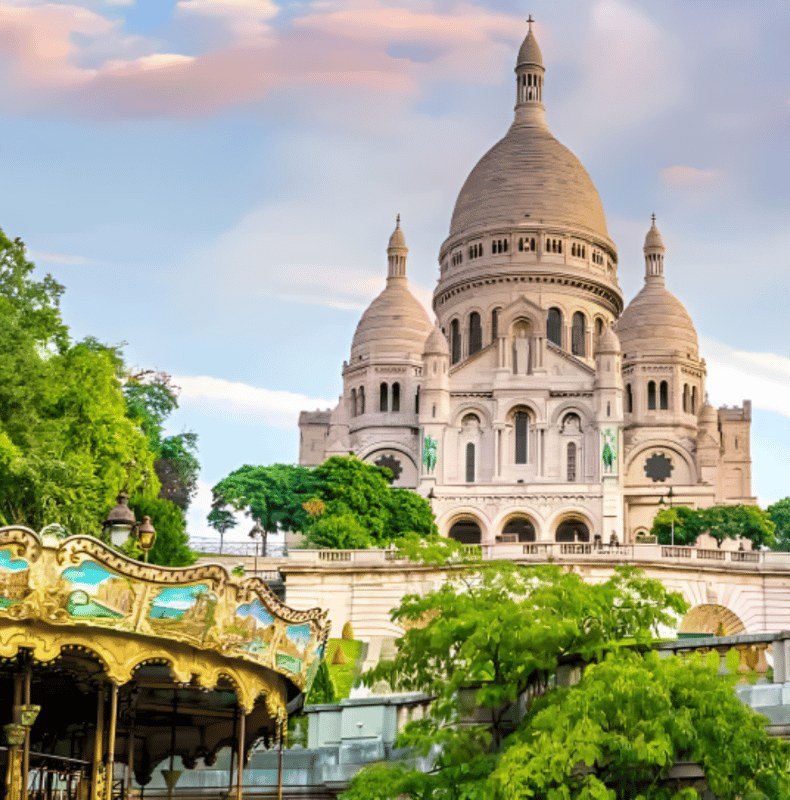
Montmartre for Art Lovers - Walking tour with Expert Guide
Starts at the cemetery gate on Avenue Rachel with cemetery entry included, and hands you a small canvas for a sketching session on the way up.
From $23 per person
Check Availability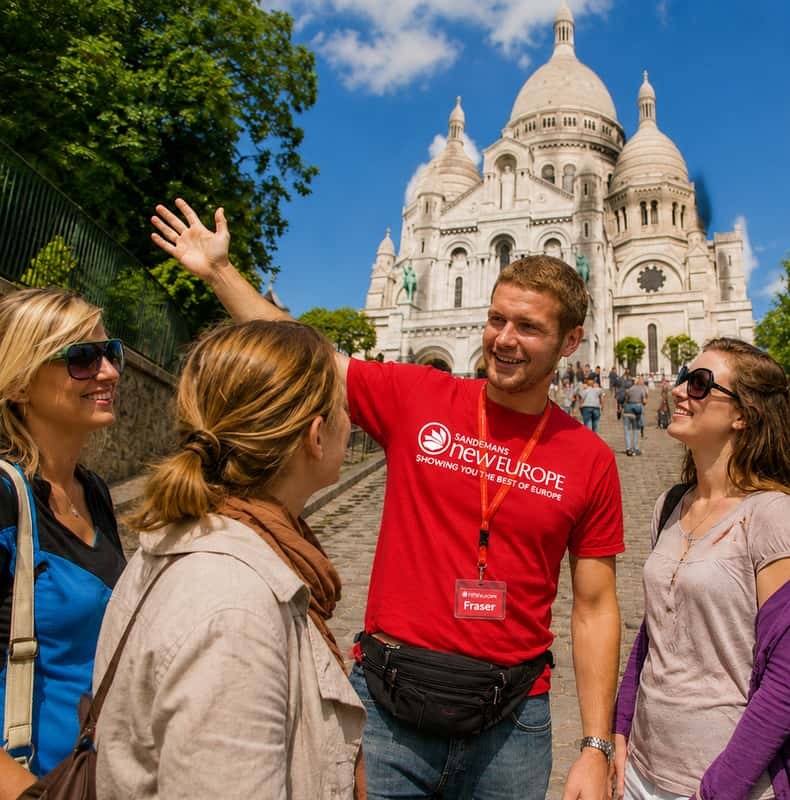
Montmartre & Sacré-Cœur Walking Tour with a Local Guide
Two hours from Place Blanche, with 54 rue Lepic, Le Bateau-Lavoir, the Moulin de la Galette and Au Lapin Agile all named on the route.
From $30 per person
Check Availability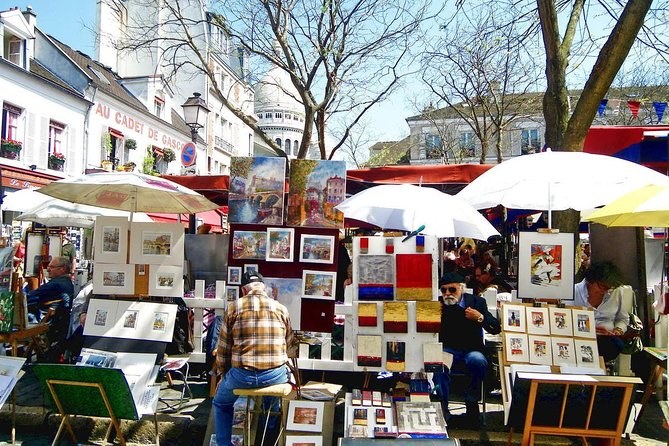
Impressionist Paris d Orsay and Montmartre Exclusive Guided Tour
A private day that starts in the Impressionist rooms of the Musée d’Orsay and ends on the hill, with transport between the two and entrance fees covered.
From $237 per person
Check Availability